The Faculty of Technology and Education at Beni Suef University is organizing a workshop on "Smart Control" to rationalize electricity consumption and support sustainable development.
21 Dec 2025
Media Center
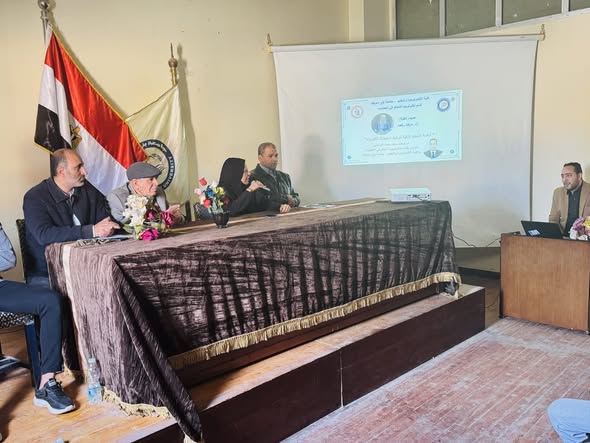
Under the patronage of Dr. Tarek Ali, Acting President of Beni Suef University, the Faculty of Technology and Education organized a workshop entitled “Smart Control Systems for Rationalizing Electricity Consumption,” under the supervision of Dr. Abulhassan Abdelmawgoud, Vice President of the University for Community Service and Environmental Development, Dr. Mervat Refaat, Dean of the Faculty of Technology and Education, Dr. Essam Hamad, Vice Dean of the Faculty for Education and Student Affairs, Dr. Ahmed Elsayed, Vice Dean of the Faculty for Community Service and Environmental Development, and Dr. Mohamed Ali Ghaleb, Head of the Department of Process Control Technology; Dr. Mohamed Elbarlasy, Lecturer in the Department of Process Control Technology, lectured in it
The university president emphasized that the workshop is part of the "Best Leading College in Achieving Sustainable Development Goals" competition, particularly Goal 7, which focuses on "Affordable and Clean Energy," and Goal 11, which aims to build "Sustainable Cities and Communities." The sessions began by establishing the concept of smart energy conservation and its strategic importance in addressing current challenges in the electricity sector, both locally and globally. The workshop also reviewed the fundamental differences between traditional methods and smart systems that rely on sensors and control units to make automated, real-time decisions
In a related context, Dr. Tariq Ali explained that the workshop reviewed the fundamental principles of control systems and their pivotal role in increasing efficiency, reducing electrical losses, extending equipment lifespan, and lowering costs. The workshop also included presentations of applied models in the fields of lighting, air conditioning, elevators, and industrial facilities, highlighting the Internet of Things (IoT) and data analytics as effective engineering tools for energy management. This reinforces the concept of smart control as an integrated technological system, not merely a matter of routine conservation
For her part, Dr. Mervat Refaat expressed the college's pride in organizing these events, which integrate academic aspects with national priorities. She noted that the workshop highlighted the pivotal role of solar energy, not only as a clean alternative but also as a key element in reducing the load on the national net, especially during rush hours. She explained that integrating renewable energy technologies with smart control systems directly contributes to improving load management efficiency and reducing electricity consumption, in line with Egypt's Vision 2030 for expanding green energy use